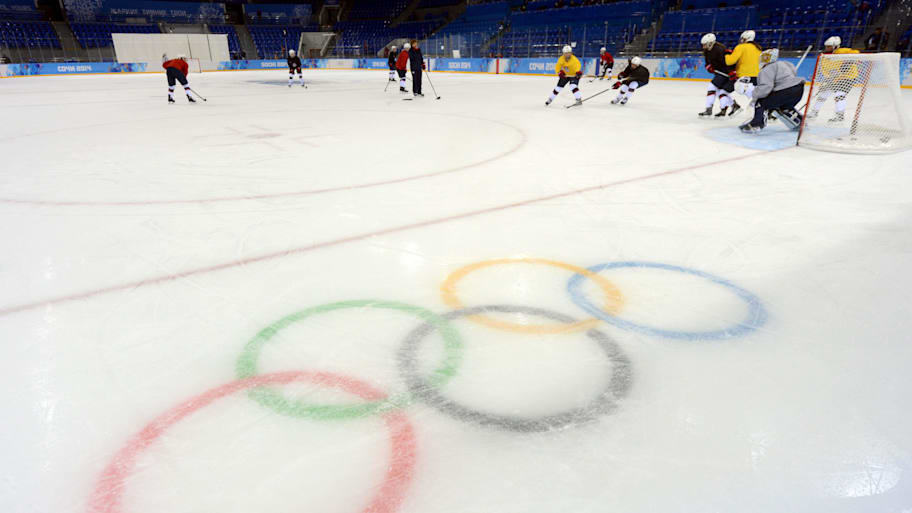
Although the Winter Olympics are always an exciting time in the world of sports, next year's Winter Games will offer an even more thrilling slate than usual, specifically because the NHL is planning to participate following a decade-long absence.
Here's a look at the background behind the NHL's 2026 Olympic presence and a peek at some of the contingencies on the line for the event.
Can NHL players play in the Olympics?
NHL players are planning to participate in the 2026 Winter Olympics for the first time since 2014 after the NHL, the NHL Players' Association and the International Ice Hockey Federation came to an agreement back in February 2024. The agreement also mentions NHL player participation in the 2030 games, though it does not guarantee it.
Earlier in December, however, NHL deputy commissioner Bill Day said that "we're not going to play" in February if NHL players believe the quality of ice at the Olympic area to be unsafe. The main hockey arena in Milan is scheduled to be finished on Feb. 2; the women's tournament will begin just three days later.
Also not ideal are the rink's dimensions, which are about three feet shorter than a standard NHL rink and therefore in violation of the agreement the NHL and the NHLPA signed with the IIHF in July. That said, both the league and the players' association are willing to look past that for now, so long as the 2030 rinks are built to proper standards.
There is no contingency plan for this year's Games if the main arena is not ready in time.
Quick peek at the main arena in Milan. Obviously, a lot of work needs to get done. The NHL sounded positive earlier this week at BOG meetings the work will get done in time for the Olympics. pic.twitter.com/58UXkwmDFd
— Darren Dreger (@DarrenDreger) December 12, 2025
Did NHL players play in the 2018 and 2022 Olympics?
NHL players were supposed to partake in the 2022 Beijing Winter Olympics, but that decision was reversed six weeks before the Opening Ceremony, as the league wanted to use the Olympic break to make up for the 50 regular-season games that were canceled due to COVID-19, per NBC Sports.
In 2018, the NHL, NHLPA, IIHF, and IOC did not come to an agreement, so NHL players did not participate in the PyeongChang Games, either.
As a result, the U.S./Canadian rosters for those two Olympic games comprised collegiate players, minor league players, and playes in European leagues.
Ok ... so when have NHL players played in the Olympics?
NHL players first debuted in the Olympics in 1998, in Nagano, Japan. The league would then go on to participate in the 2002 games in Salt Lake City; the 2006 games in Turin, Italy; the 2010 games in Vancouver; and the 2014 games in Sochi.
What are the rules regarding NHL participation?
Each national association was required to submit a list of 42 skaters and five goalies by Oct. 15; the players on those lists were/will be subject to Olympic drug testing rules and regulations.
The final preliminary rosters of 22 skaters and three goalies are due by Dec. 31. Changes due to injury are allowed afterward, until the start of the tournament.
Full men's ice hockey schedule at 2026 Olympics
Here is a look at the full men's ice hockey schedule at the 2026 Olympics.
Group A: Canada, Switzerland, Czechia, France
Group B: Finland, Sweden, Slovakia, Italy
Group C: United States, Germany, Latvia, Denmark
| Date | Event | Venue |
|---|---|---|
| Feb. 11 | Preliminary Round, Group B | Milano Santagiulia Ice Hockey Arena |
| Feb. 12 | Preliminary Round, Groups A and C | Multiple Venues |
| Feb. 13 | Preliminary Round, Groups A and B | Multiple Venues |
| Feb. 14 | Preliminary Round, Groups B and C | Multiple Venues |
| Feb. 15 | Preliminary Round, Groups A and C | Multiple Venues |
| Feb. 17 | Qualification Playoffs | Multiple Venues |
| Feb. 18 | Playoff Quarterfinals | Multiple Venues |
| Feb. 20 | Playoff Semifinals | Milano Santagiulia Ice Hockey Arena |
| Feb. 21 | Bronze Medal Game | Milano Santagiulia Ice Hockey Arena |
| Feb. 22 | Gold Medal Game | Milano Santagiulia Ice Hockey Arena |
The three group winners and the top second-place team will advance to the quarterfinals. The remaining eight teams will play a qualification round to determine the final four teams in the quarterfinals, wherein elimination will begin.
More on Sports Illustrated
- Doug Gottlieb Will Step Away From Radio Show to Focus on Coaching UW Green Bay
- Bears Are Exploring Moving Out of Chicago and Into Indiana
- Ranking the Top 25 Players in the 2025 College Football Playoff
- Ole Miss’s CFP Coaching Chaos Has a Precedent … and a Title
- Making the Case for Six First-Time NBA All-Stars
This article was originally published on www.si.com as Can NHL Players Play in the Olympics? Understanding the Rules of NHL Participation.